


Footy sounds a little different this week—and that’s the point. Kayo Sports is turning up the volume on diversity by introducing Hindi and Mandarin commentary feeds for two upcoming AFL matches. The move brings footy into the homes of thousands of Australians who haven’t always heard themselves in the commentary box.
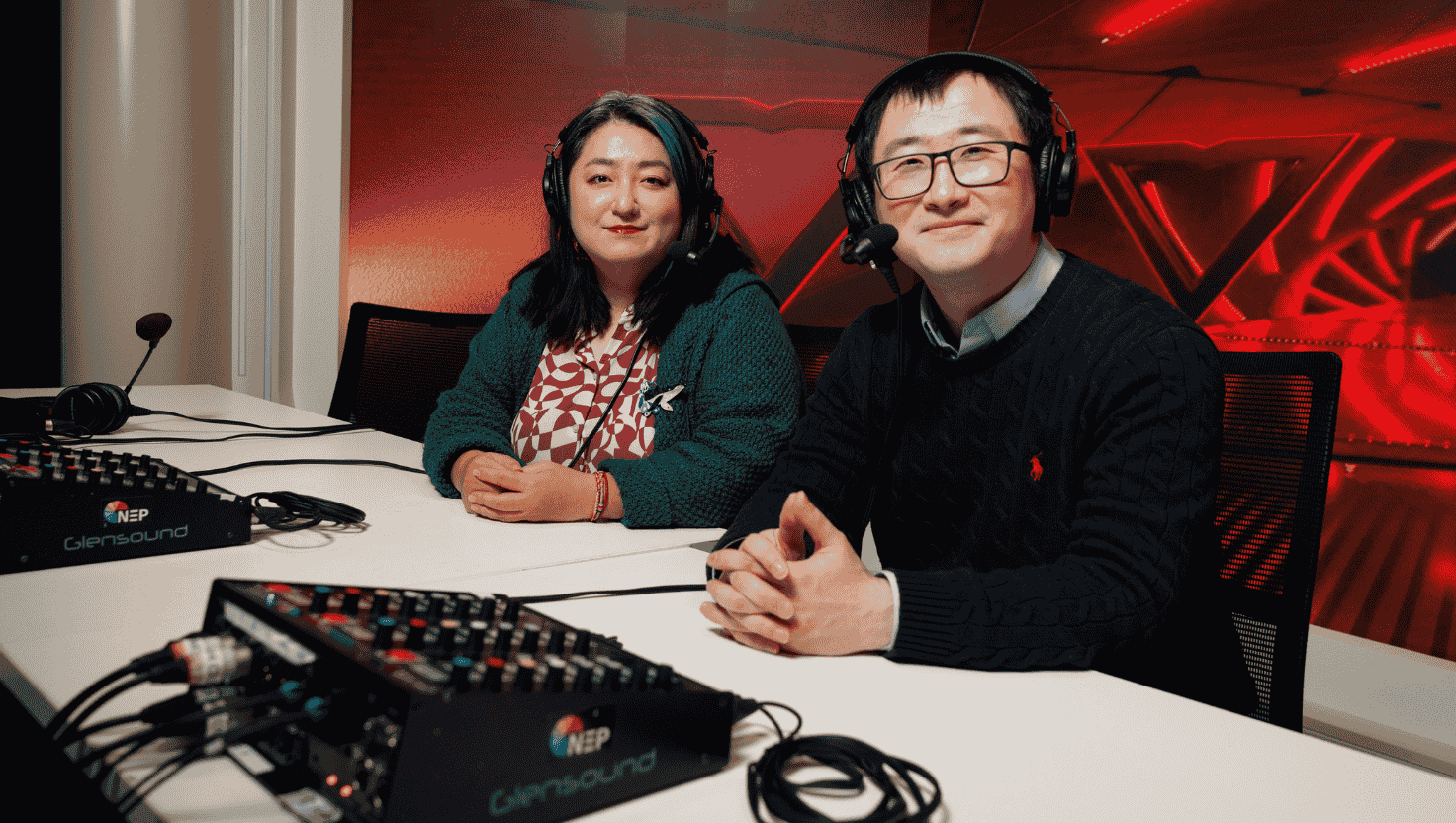
The Western Bulldogs take on the GWS Giants this Thursday, and for Hindi-speaking fans, the match will be more than just another stream. It’s a chance to hear the action narrated in a language that hits closer to home. Commentators Rajbir Ghuman and Harbir Singh Kang will call the match, and the on-screen graphics will switch to Hindi too. Then on August 9, Brisbane Lions face off against Sydney Swans in a Grand Final rematch with Mandarin commentary from Agnes Yao Lu and Barney Yu Xia.
The voices may be new to Fox Footy screens, but not to the mic. All four commentators have experience calling games on National Ethnic & Multicultural Broadcasters Council (NEMBC) radio. And they’ve each found their own way into footy, through life in Australia. They’ve followed the game, studied its rhythms, and—like plenty of other Australians—grown to love it for its chaos and charm. Now, they get to share that affection with fans in their own communities.
Rajbir, Harbir, Agnes, and Barney aren’t just translating the sport—they’re localising it. A hip-and-shoulder becomes more than a move; it becomes a metaphor. They’re reshaping how the game is understood, not just heard. It’s commentary with cultural context.
The project sits under the banner of the AFL’s Cultural Heritage Series, a nod to the fact that football doesn’t belong to any one background. It belongs to everyone who barracks, boots, umpires, or even just tunes in once in a while. With every kick, goal, fumble and bounce, there’s a chance to speak to someone new.
Michael Neill, General Manager of Fox Footy, said the move is about energy and connection. “We’re excited to bring the Hindi and Mandarin language feeds to life across Kayo Sports and Foxtel and share our great game with a whole new audience,” he said. “Raj, Harbir, Agnes and Barney will bring a unique energy and passion to the broadcast, supported by a team of Hindi and Mandarin speaking production crew. We know these audiences will love their calls.”
Kayo and Foxtel are no strangers to experimenting with alternate language feeds. But this year’s effort is part of a broader push to take multicultural programming out of the niche basket and plant it right in the mainline. There’s no ‘special occasion’ here. It’s Thursday night footy and Saturday footy, just in more languages. As a bonus, no new subscription is needed—the alternate feeds are part of the standard Kayo package.
Even the Foxtel TV channels are joining the lineup: Channel 507 will carry the Hindi feed of the Bulldogs-Giants match on July 31, while Channel 505 will host the Mandarin broadcast of Lions-Swans on August 9. No additional apps, toggles or sign-ups required.
The broadcasts are more than just translations. They’re adapted feeds, built with cultural understanding baked in. It’s about nuance. Which metaphors carry, which slang lands, which moments demand silence and which demand volume. It takes more than just knowing two languages to do this well—it takes cultural fluency. It takes empathy and energy. Fortunately, this group has both.
Kayo Sports has framed the initiative as part of its broader mission to bring more fans closer to the sports they love. That sometimes means close-ups. Sometimes it means stats overlays. Sometimes, like now, it means hearing a goal screamed in a voice that sounds like your dad, or your neighbour, or the person who does the morning announcements at your local temple or community centre.
Agnes Yao Lu and Barney Yu Xia, who will call the Brisbane vs Sydney match, both bring significant experience from community broadcasting. For them, this isn’t a side hustle—it’s a passion. It’s about giving the next generation of Mandarin-speaking fans a better start with the game than they had.
Rajbir Ghuman and Harbir Singh Kang have a similar story. They didn’t grow up with AFL in their backyards. They discovered it through work, mates, community clubs. And now, their commentary style reflects that journey. They call it with curiosity and commitment. They explain what needs explaining and celebrate what deserves celebrating.

The effort aligns with how multicultural Australia actually watches sport. Not just in English. Not just through a single lens. Whether it’s cricket or football or footy, Aussies experience sport through a thousand accents. This move by Kayo is less about ticking a diversity box and more about keeping pace with how Australians already live.
According to viewership data, the AFL audience is growing more multicultural, and this isn’t a one-off experiment. Kayo is planning further alternate language broadcasts for upcoming AFLW matches this season. The fixtures aren’t locked in yet, but the intent is clear: build it, and they will stream.
There’s an understated confidence to the rollout. It’s not hyped as a revolution, but it is a shift. These broadcasts don’t scream for attention. They just exist, confidently, for those who’ve been waiting. That’s where the real strength is.
For decades, sports commentary in Australia has sounded mostly the same—anglo, blokey, predictable. Now, that soundscape is widening. That doesn’t dilute anything. It adds flavour. Football is still football, no matter what language it’s called in. But when it’s called in your language, it just hits different.
There are plenty of ways to measure inclusivity in sport. You can count the players on the field, the diversity in the coaching box, the outreach programmes in schools. But broadcasts matter too. They’re how culture travels. They’re how a parent introduces a kid to a game they didn’t grow up watching. They’re how a footy fan is born.
Fox Footy and Kayo are betting on that. They’re betting that language isn’t a barrier to sport—it’s a bridge. And when that bridge is built thoughtfully, with the right voices at the mic, people will cross it.
Support independent community journalism. Support The Indian Sun.

Follow The Indian Sun on X | Instagram | Facebook

Support Independent Community Journalism
Dear Reader,The Indian Sun exists for one reason: to tell stories that might otherwise go unheard.
We report on local councils, state politics, small businesses and cultural festivals. We focus on the Indian diaspora and the wider multicultural community with care, balance and accountability. We publish in print and online, send regular newsletters and produce video content. We also run media training programs to help community organisations share their own stories.
We operate independently.
Community journalism does not have the backing of large media corporations. Advertising revenue fluctuates. Platform algorithms change. Costs continue to rise. Yet the need for credible, grounded reporting in a multicultural Australia has never been greater.
When you support The Indian Sun, you support:
• Independent reporting on issues affecting migrant communities
• Coverage of local and state decisions that shape daily life
• A platform for small businesses and community groups
• Media training that builds skills within the community
• Journalism accountable to readers
We cannot cover everything, but we work to cover what matters.
If you value thoughtful reporting that reflects Australia’s diversity, we invite you to contribute. Every donation helps us maintain the quality and consistency of our work.
Please consider making a contribution today.
Thank you for your support.
The Indian Sun Team


