The Federal Government’s 2026-27 Budget has drawn mixed reactions from advocacy groups, with support for investments in health, aged care and migrant workforce programs tempered by concerns over cuts to multicultural services, changes to the National Disability Insurance Scheme (NDIS), and rising offshore detention costs.
Carers Australia welcomed continued funding for workplace support programs and aged care measures, while warning that planned NDIS savings could place more pressure on unpaid carers.
Carers Australia CEO Joanna Cave said funding for the Carer Inclusive Workplace Initiative would help improve workforce participation for carers.
“It is excellent news for carers that funding for the Carer Inclusive Workplace Initiative (CIWI) will continue, with funding of $3.2 million over the next four years. We know this program encourages workplaces to be more aware and more flexible in their approach to employing carers in the workforce,” she said.
“Many carers want to work, but struggle to find workplaces that are supportive of their caring role. CIWI provides employers with tools, resources and recognition to create inclusive and flexible workplaces.”
“More than three million Australians are carers, and many want to work and work more hours. We need to support carers to be part of our workforce – working is good for their wellbeing and there is a potential productivity bonus,” she said.
Cave also backed additional aged care funding announced in the Budget.
“We are pleased to see the additional $3.7 billion investment for more aged care beds, packages and better care for older Australians. Aged care supports will go a long way to enabling older Australians to retain their independence longer, and this is good for both older Australians and their carers.”
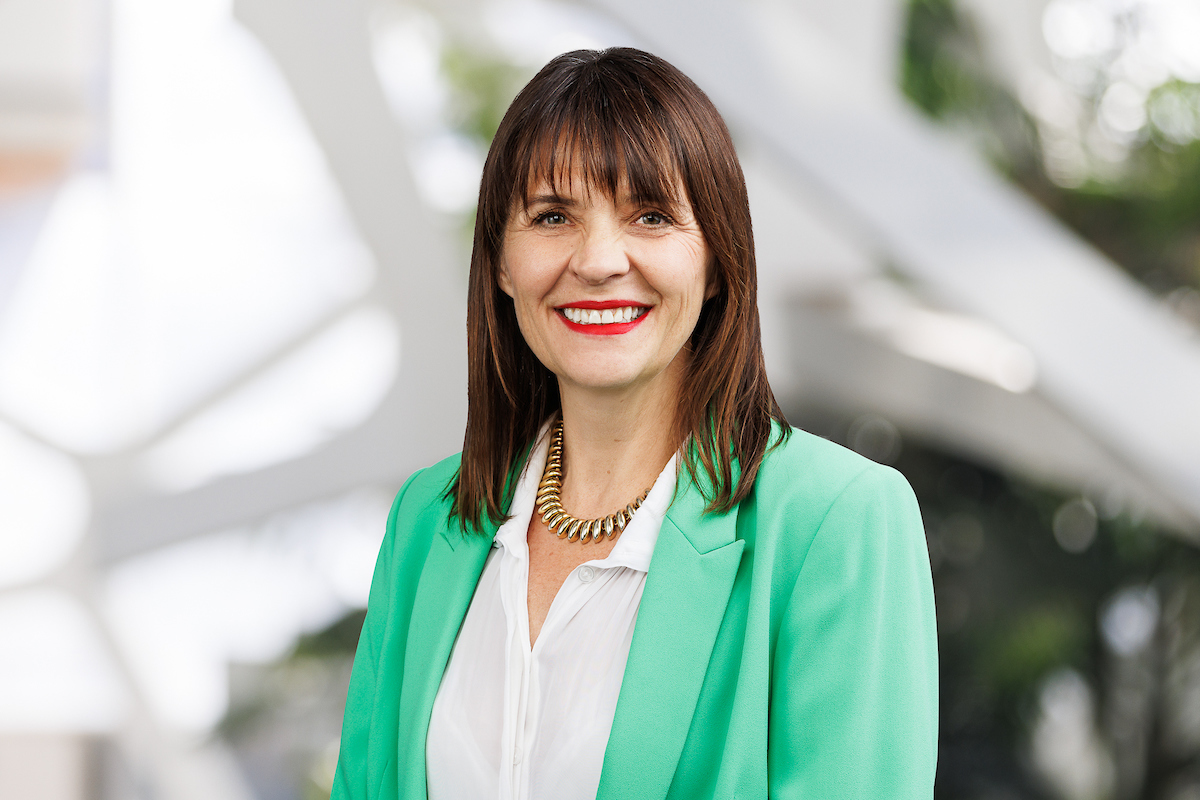
Carers Australia CEO Joanna Cave
“We are pleased to see the additional $3.7 billion investment for more aged care beds, packages and better care for older Australians…Carers Australia raised concerns that more than half of the Budget’s projected savings over the next four years would come from the NDIS”
“In addition, the move to invest $6.7 million in innovative respite care grants for carers of people with dementia answers the call in our Budget Submission to recognise the importance of respite to carers and those receiving care for their mental and physical health,” Ms Cave said.
However, Carers Australia raised concerns that more than half of the Budget’s projected savings over the next four years would come from the NDIS.
“We are saddened to see that Australians with a disability and their carers are left shouldering the majority of the cost saving burden in this Budget. We support changes to ensure the NDIS continues to be financially sustainable, but less funding and fewer supports for recipients will shift the responsibility to carers.”
“We know that whenever there are system gaps, family, friend and kin carers are the fallback option and many of those carers are already at breaking point. Our Carer Wellbeing Survey (2025) showed carers are half as likely to have healthy levels of wellbeing compared to other Australians and they are twice as likely to experience high levels of psychological distress. They need more support, not less.”
Cave said the organisation would continue engaging with government during the consultation period for the reforms.
“We look forward to working with government to ensure carers are not more disadvantaged by these changes and the people they care for continue to be supported to thrive,” she said.
Federation of Ethnic Communities’ Councils of Australia, commonly known as FECCA, said parts of the Budget would benefit multicultural communities but warned cuts to multicultural affairs funding could weaken social cohesion efforts.
The organisation welcomed measures including a $25 billion investment in public hospitals, expanded bulk billing, funding for aged care and women’s health programs, and support for skilled migration and refugee employment pathways.
FECCA Chair Peter Doukas
“Multiculturalism and social cohesion go hand in hand. You cannot have one without investing in the other. Building social cohesion is not a peripheral concern, it is a key pillar of national resilience and economic productivity”
FECCA also acknowledged funding linked to responses following the Bondi attack, including measures targeting hate speech, violent extremism and mental health support.
But the organisation criticised the reduction of $160 million in funding for the Multicultural Affairs and Citizenship program.
FECCA Chair Peter Doukas OAM said: “Multiculturalism and social cohesion go hand in hand. You cannot have one without investing in the other. Building social cohesion is not a peripheral concern, it is a key pillar of national resilience and economic productivity.”
FECCA CEO Jill Morgan AM said the government’s language around resilience and reform needed to extend to migrant communities.
“The Government has called this a budget of resilience and reform. We take that seriously. Resilience is built in communities, through services and initiatives that help people belong. Reform means very little if it leaves a third of the population behind.”
FECCA called on the government to establish the National Anti-Racism Framework and continue anti-racism initiatives, multicultural community grants and recommendations from the Multicultural Framework Review.
Meanwhile, Asylum Seeker Resource Centre criticised the government over offshore detention spending and support payments for asylum seekers.
The organisation said spending on offshore detention had increased by almost $400 million and was approaching $1 billion this financial year, while support payments for asylum seekers remained below the poverty line.
Jana Favero, Deputy CEO of the Asylum Seeker Resource Centre. Photo/Refugee Council of Australia
“The Government is allowing spending on offshore detention to spiral towards a billion dollars this year, while thousands of people seeking asylum are left destitute in the Australian community, and the tiny number who do get support are forced to survive on just $44 a day”
Deputy CEO Jana Favero said: “The Government is allowing spending on offshore detention to spiral towards a billion dollars this year, while thousands of people seeking asylum are left destitute in the Australian community, and the tiny number who do get support are forced to survive on just $44 a day.”
“These are political choices, and they reveal a Government that is still willing to spend enormous amounts on punishment and secrecy while denying some of the most marginalised people in our community basic dignity and security.”
The ASRC welcomed measures aimed at improving migrant skills recognition and reducing barriers to employment but argued thousands of asylum seekers living in the community were still unable to work.
“We welcome investment in recognising migrant skills and reducing barriers to employment, but it makes no sense to talk about unlocking migrant potential while nearly 13,000 people seeking asylum living in the community are still banned from working. These are people who want to contribute, support themselves and build their lives,” Favero said.
The organisation also warned changes to visa processing priorities could affect refugee family reunification.
“The Government is right to recognise that there are thousands of migrants already living in Australia who have spent years trapped in uncertainty and need pathways out of limbo. But certainty for some families cannot come at the expense of other families trying to get loved ones out of war zones and conflict,” she said.
The Budget measures are expected to remain under close scrutiny from disability, multicultural and refugee advocacy groups as consultation on several reforms continues over the coming months.
Support independent community journalism. Support The Indian Sun.
The Indian Sun exists for one reason: to tell stories that might otherwise go unheard.
We report on local councils, state politics, small businesses and cultural festivals. We focus on the Indian diaspora and the wider multicultural community with care, balance and accountability. We publish in print and online, send regular newsletters and produce video content. We also run media training programs to help community organisations share their own stories.
We operate independently.
Community journalism does not have the backing of large media corporations. Advertising revenue fluctuates. Platform algorithms change. Costs continue to rise. Yet the need for credible, grounded reporting in a multicultural Australia has never been greater.
When you support The Indian Sun, you support:
• Independent reporting on issues affecting migrant communities
• Coverage of local and state decisions that shape daily life
• A platform for small businesses and community groups
• Media training that builds skills within the community
• Journalism accountable to readers
We cannot cover everything, but we work to cover what matters.
If you value thoughtful reporting that reflects Australia’s diversity, we invite you to contribute. Every donation helps us maintain the quality and consistency of our work.