

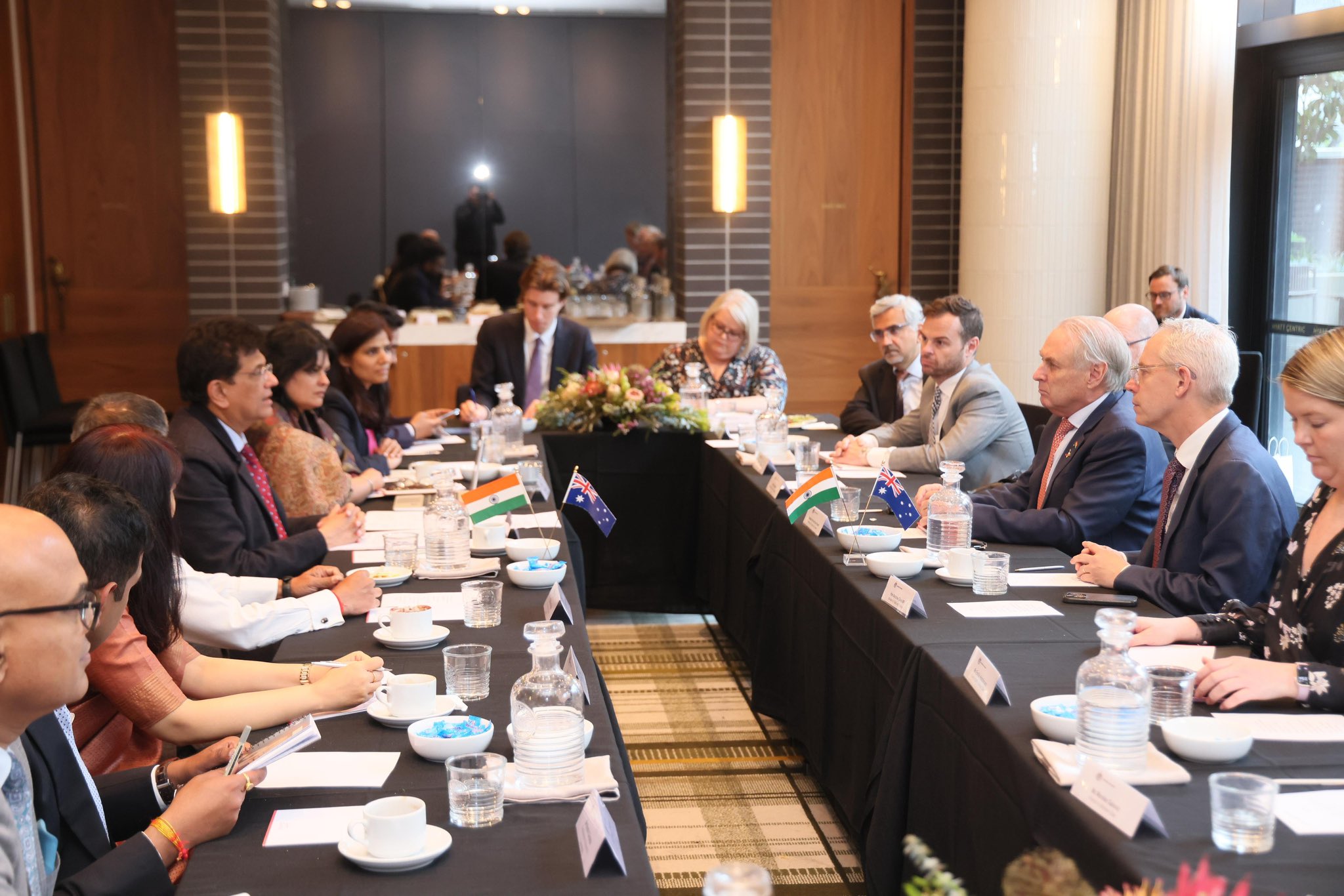
Australia has emerged as a key stop on India’s trade diplomacy map, with Commerce Minister Piyush Goyal meeting Australian ministers in Melbourne to discuss deeper economic ties and a more ambitious partnership.
During the meeting with Don Farrell, Minister for Trade & Tourism of Australia, and Andrew Giles, Minister for Skills and Training, Goyal said the talks “focused on unlocking the full potential of the India-Australia economic partnership, including through an ambitious and balanced Comprehensive Economic Cooperation Agreement.” The meeting marked the culmination of a schedule aimed at deepening business links between the two nations.
Trade data show that bilateral merchandise trade reached 24.1 billion US dollars in the financial year to March, an eight per cent increase on the year before, building on the momentum from the Economic Cooperation and Trade Agreement (ECTA) which began three years ago.
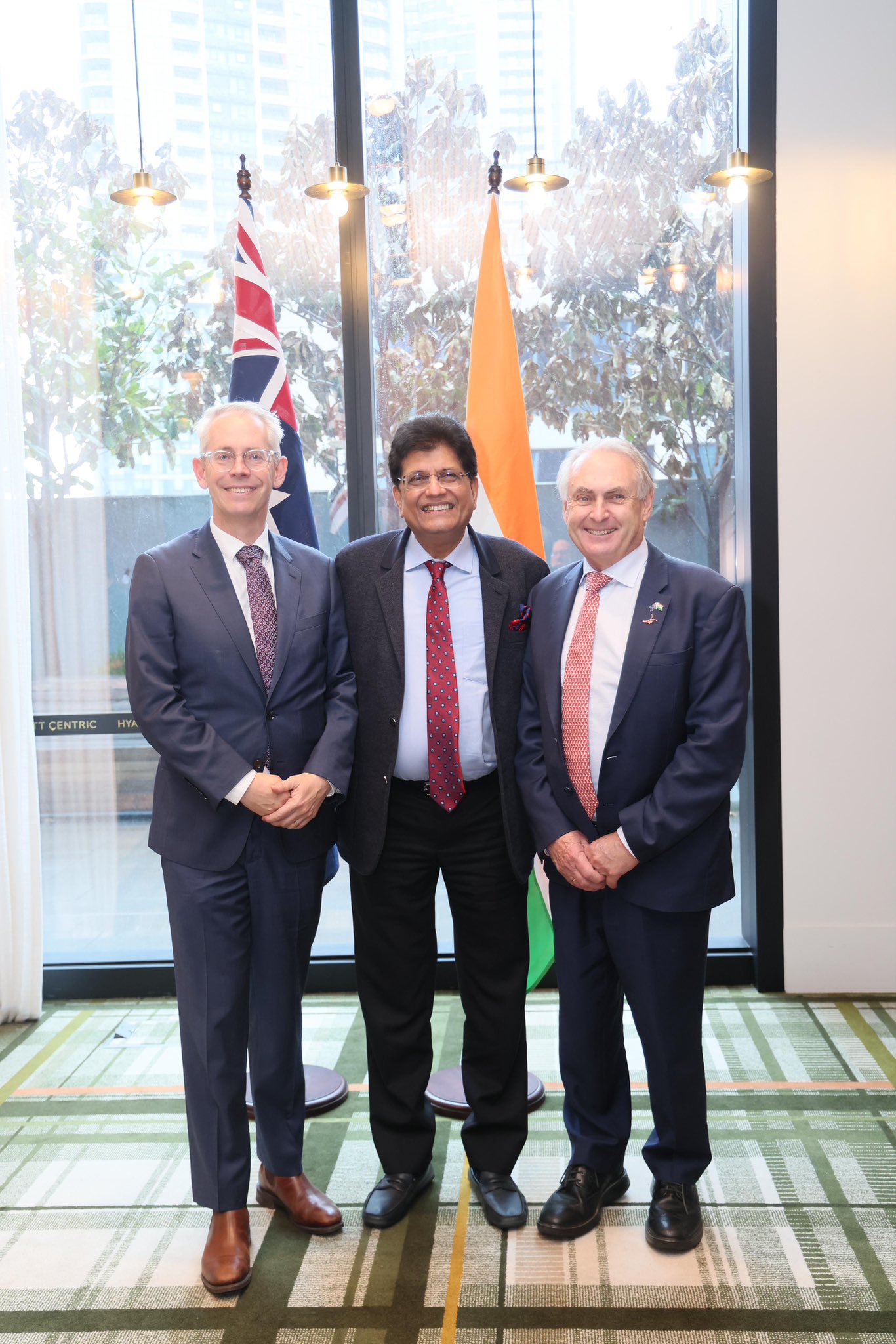
Goyal said the talks were aimed at turning intent into action on both sides. “Our constructive discussions focussed on unlocking the full potential of the India-Australia economic partnership, including through an ambitious and balanced Comprehensive Economic Cooperation Agreement.” He framed the deal as a practical next step, rather than a symbolic one, and pushed the point that both countries should aim for something that works for business in real terms.
The Melbourne stop followed a five-day tour of New Zealand, where Goyal co-chaired the fourth round of free-trade talks with his counterpart there. The shift to Australia brought the focus into sharpened relief: turning existing goodwill into concrete arrangements, particularly as both economies look to expand in renewables, skills training and investment flows. Goyal’s message to Australian exporters and investors was frank: more open doors, without unrealistic promises.
The visit reinforced that the India-Australia partnership is now operating on an elevated plane. For Australia, the market access opened by the ECTA already shows signs of widening opportunities. For India, the attraction lies in capital, supply chain diversity and skills flow engagement. The next phase of talks, labelled as the Comprehensive Economic Cooperation Agreement (CECA), will be watched closely.
Support independent community journalism. Support The Indian Sun.

Follow The Indian Sun on X | Instagram | Facebook

Support Independent Community Journalism
Dear Reader,The Indian Sun exists for one reason: to tell stories that might otherwise go unheard.
We report on local councils, state politics, small businesses and cultural festivals. We focus on the Indian diaspora and the wider multicultural community with care, balance and accountability. We publish in print and online, send regular newsletters and produce video content. We also run media training programs to help community organisations share their own stories.
We operate independently.
Community journalism does not have the backing of large media corporations. Advertising revenue fluctuates. Platform algorithms change. Costs continue to rise. Yet the need for credible, grounded reporting in a multicultural Australia has never been greater.
When you support The Indian Sun, you support:
• Independent reporting on issues affecting migrant communities
• Coverage of local and state decisions that shape daily life
• A platform for small businesses and community groups
• Media training that builds skills within the community
• Journalism accountable to readers
We cannot cover everything, but we work to cover what matters.
If you value thoughtful reporting that reflects Australia’s diversity, we invite you to contribute. Every donation helps us maintain the quality and consistency of our work.
Please consider making a contribution today.
Thank you for your support.
The Indian Sun Team


