

Australia’s summer would seem incomplete without cricket. And with many multicultural clubs raising their bats, there is excitement for players and fans alike.
For people from South Asian countries such as India, Pakistan, Sri Lanka or Bangladesh, cricket is religion. And with Australia’s changing demography and growing population, cricket is seeing its best expression.
It is the summer of cricket.
Victoria is home to many such clubs. For this article, it was not possible to reach out to all or many, but these few stories reflect how people from diverse backgrounds are playing cricket with passion.
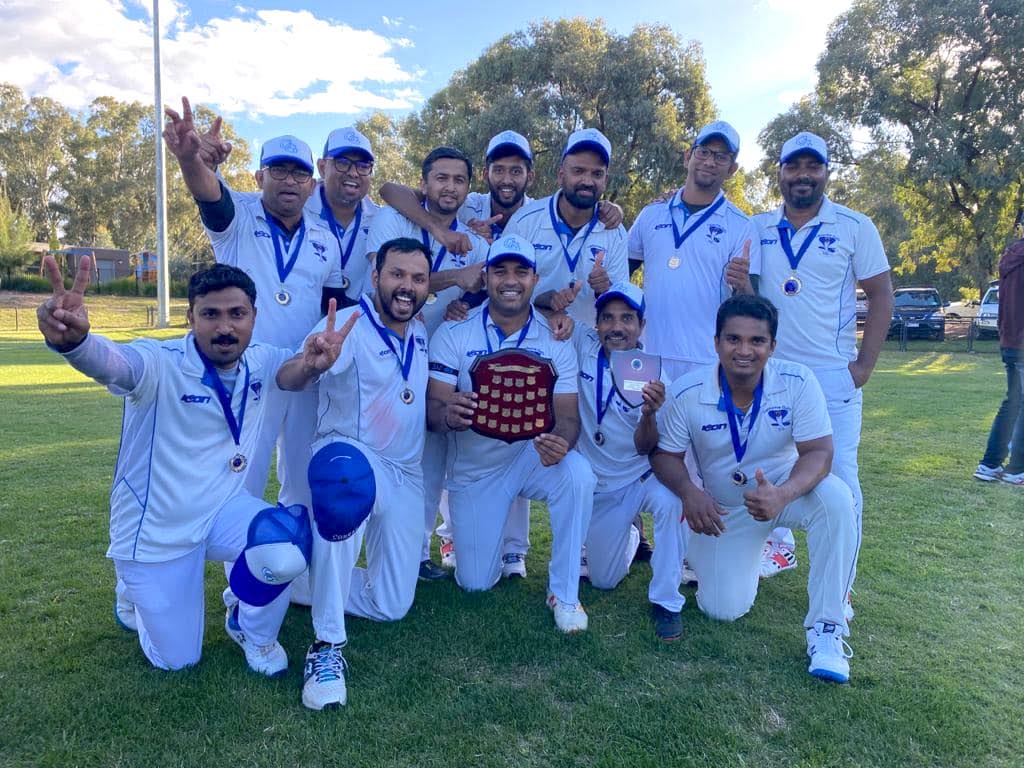
Vinayak Patil is originally from Bangalore, India. When he came to Australia in 2005, he found other people from his home state Karnataka playing cricket. They decided to form a team and named it Rockers Cricket Club. Their Facebook page is described as “’Rockers’ for cricket enthusiasts, and Indian patriots who celebrate their love for the game and the nation during Karnataka Rajyotsava year after year.”
“As time went on, we got to know other teams such as Kings XI Punjab, Mysore Elevens, Tiranga, Jai Hind, MCC Maharashtra Cricket Club, etc. They were all formed slowly along the same time as us. We had an idea to organise a tournament and spoke with other team captains,” says Patil.
For the past six-seven years, the Rockers Cricket Club has been organising the Rockers Rajyotsava Cup—touted to be one of the big ones by local cricket enthusiasts.
Patil thanks the support from the local councils and getting allotted two grounds for the matches, where ten invited teams vie for the Cup.
Of course, COVID had made the tournament impossible the past two years, but this year it is well scheduled for 13-20 November.
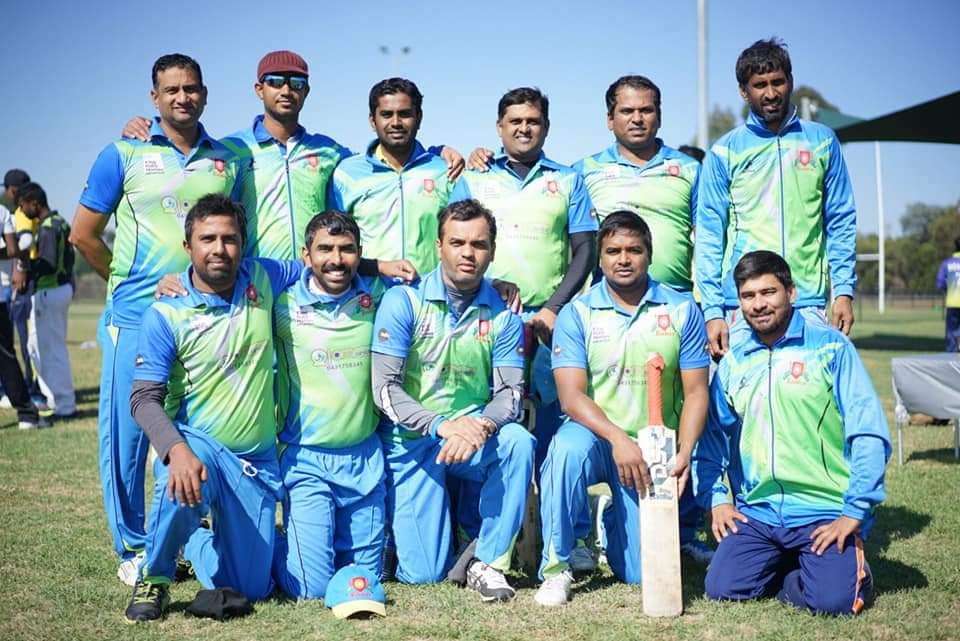
Tariq Butt is from Pakistan. As part of the Ahmadiyya Muslim Association of Victoria’s sports group, Butt says many association members play cricket for different clubs.
The only time Butt represented the winning Pakistan team was at the first Multicultural Sports Group competition among different South Asian countries held in March 2020 in Casey.
“Cricket is becoming very popular,” says Butt pointing to the growing enthusiasm. “Even after COVID, the players in our association are continuing to play for their respective clubs.”
Despite having had a health setback himself after contracting COVID, Butt is determined to be once again in Team Pakistan for the Multicultural Sports Group competition to be held early next year. He is keeping up with his practise.
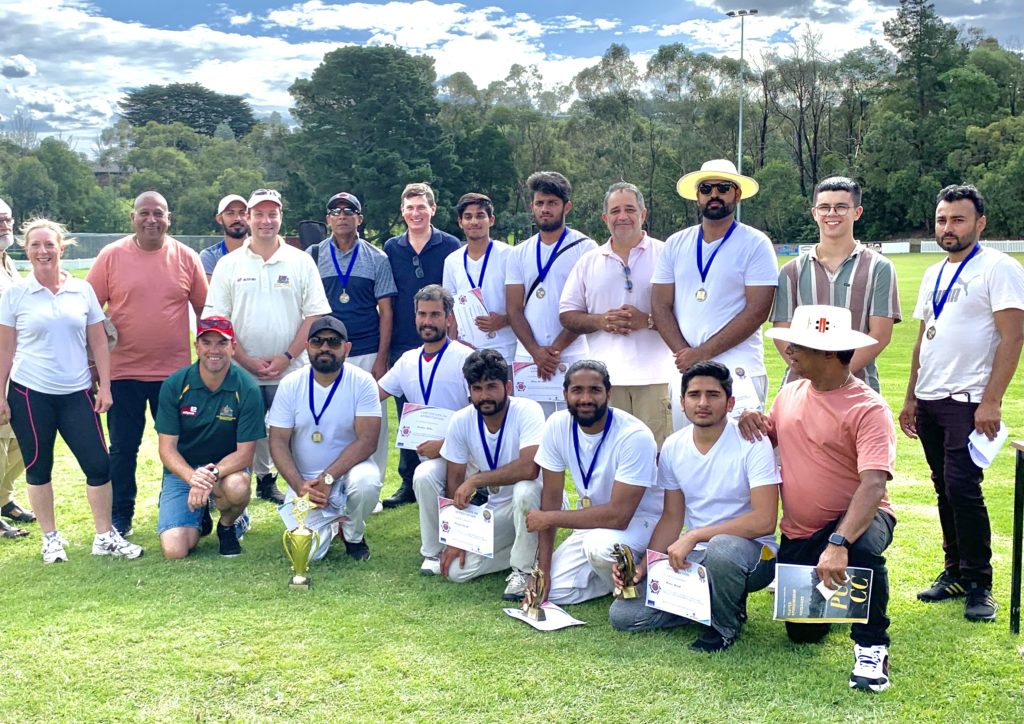
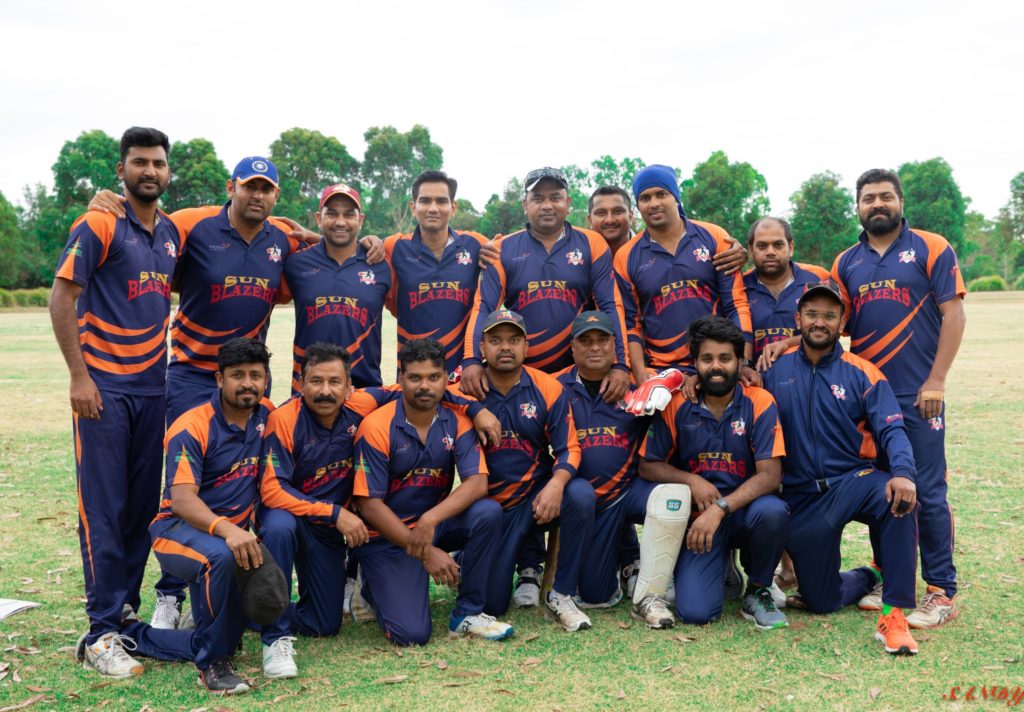
Sandeep Sasidharan, from India, plays for the Sun Blazers Cricket Club, Victoria, Australia, in the eastern suburbs.
“Sun Blazers was formed ten years ago,” says Sashidharan. “Our first captain was Billy Vincent. He remained captain for three years. After that, we made a rule to have a new captain every year on rotation through a voting system.”
Earlier the club went by the name Surya Cricket Club but separated to form Sun Blazers Cricket Club. Because of the growing number of players, the club has two groups now—Sun Blazers and Sun Blazers Blue. Sasidharan is the vice-captain for the latter.
This year, after four years, Sun Blazers Cricket Club is hosting its T20 Cricket Tournament, the Phoenix Blazers Cup, the finals of which is in mid-December.
The tournament consists of 18 teams with “immaculately planned league stages where we are expecting to witness some finest cricketing games of the season. This tournament will provide the teams and their players with an opportunity to showcase their passion and skills for cricket, with a long list of prizes awaiting the participants”.
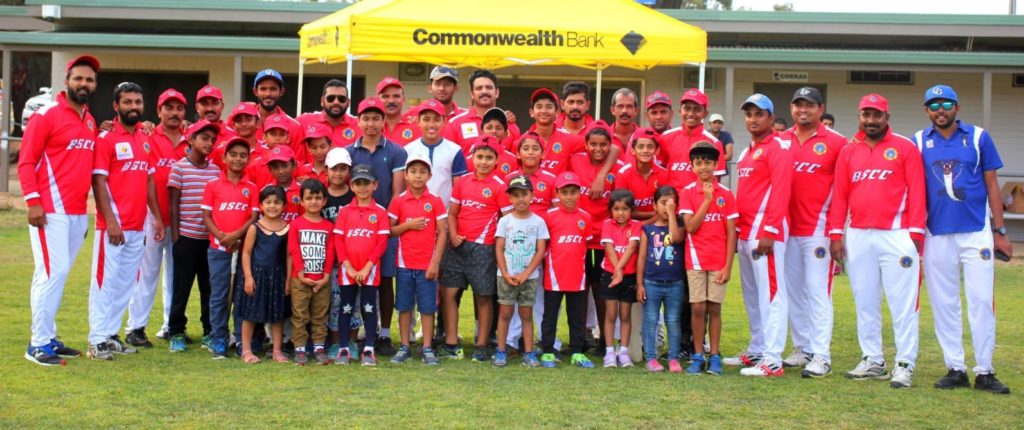
In regional Victoria, the Bendigo Strikers, mainly comprising the Malayali diaspora from Kerala, India, started playing cricket around 2010. Initially the men played for an English cricket club, the California Gully Cricket Club also called Cobras.
Bendigo Strikers has been playing many games as a team since 2014. In 2019 it registered as corporation with Consumer Affairs, Victoria. “Our first tournament was the one organised by an Afghanistan club in Shepparton,” recalls Anil Jose, vice-captain, who joined in 2015, in an earlier interview to The Indian Sun.
“There is a lot of interest now. Before we had only 16-20 players, currently we have 40 registered players,” says Issac Joseph, club president, who along with acting captain Josan George and the rest of the members are prepping well for the matches ahead.
So this year, Bendigo Strikers is very excited about playing for the second time in the Emu Valley League cricket matches which is on for the entire summer season.
“Usually, most Australian league plays are only for the summer season, then the grounds are lent to the Footy guys. We play four one-days and rest 10 are two-day matches. Then the 20:20 as well,” says Joseph.
The essentials of cricket are easy to understand. But with the local community clubs, while T20 is a popular format, some things throw up a fun surprise.
“We play two-day matches, and most of our players are very new to that format including myself. It is 60 overs over two Saturdays, like a mini test,” says Joseph of Bendigo Strikers
Sasidharan, Sun Blazers Blue, says, “We mostly play T20, then we play league matches on Saturdays, which comprise 36 overs.”
For Patil of Rockers Cricket Club, it is the hard tennis ball they are accustomed to. “We play T10 format, different from normal cricket. The reason we choose this is because for T10, the tennis ball is quite suitable. It is a fast-moving game; we don’t have the time to put on all the gears. We have to train differently because we are concerned about making runs. We spend 4-5 hours training every Sunday as we are playing 4-5 tournaments.”
The biggest tournament in T10 is the Easter Cup every April, Patil adds.
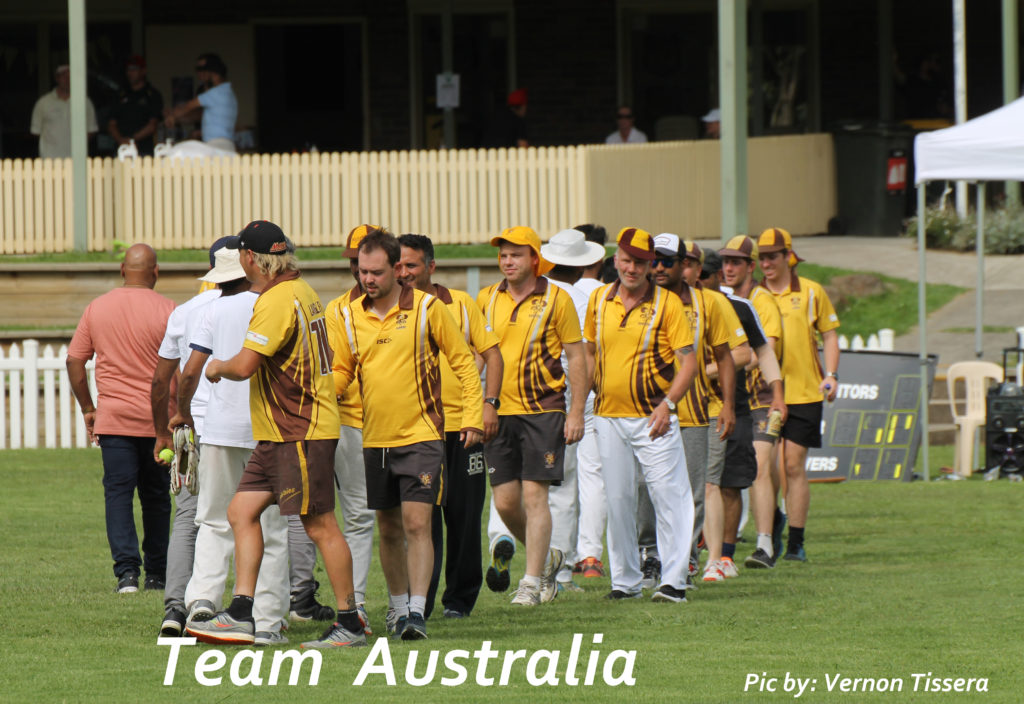
Which is all to say that the different game styles make for interesting rivals and competitions as cricket hots up in Victoria.
Uday Chandran, one of the founders of the Multicultural Sports Group that organised the first multicultural cricket competition in Cassey in 2020, is excited about the second one set to take place early next year. Interestingly, the event would win a nomination medal from the Cardinia Shire Council’s Australia Day Award 2021 for Event of the Year.
“We have already received the grant from the Cardinia Shire Council. We will be trying to get as many nationalities as possible again this time,” he says. “The aim is to make it more multicultural and promote social cohesion, but it is also a good place for networking.”
But there is the other aspect of cricket which reveal the social aspect of the game. Families and friends of families come to watch, sometimes that is followed by a barbecue.
And the fact that cricket articulates a shared culture in the diasporic communities is evident. Butt says, “Cricket is the only sport we played in Pakistan throughout our childhood. Nobody teaches us cricket; it is in our blood.”
It’s a sentiment that many from other south Asian countries will second.
“Being from India, we all played a lot of cricket back home and we just wanted to continue,” says Patil.
“We watch together, play together. It’s our passion. I have found my cricket family,” says Sasidharan.
Also, quite reflective of the Australia’s multicultural character, Sasidharan says the Sun Blazers often have other players such as those from the Afghan community or Sri Lankan as substitutes. “They are not permanent but when someone gets injured, we call them.”
It is going to be an intensive summer of cricket. Given their passion, the local cricket clubs deserve bigger crowd.
Connect with Indira Laisram on Twitter
Support independent community journalism. Support The Indian Sun.

Follow The Indian Sun on Twitter | Instagram | Facebook

Support Independent Community Journalism
Dear Reader,The Indian Sun exists for one reason: to tell stories that might otherwise go unheard.
We report on local councils, state politics, small businesses and cultural festivals. We focus on the Indian diaspora and the wider multicultural community with care, balance and accountability. We publish in print and online, send regular newsletters and produce video content. We also run media training programs to help community organisations share their own stories.
We operate independently.
Community journalism does not have the backing of large media corporations. Advertising revenue fluctuates. Platform algorithms change. Costs continue to rise. Yet the need for credible, grounded reporting in a multicultural Australia has never been greater.
When you support The Indian Sun, you support:
• Independent reporting on issues affecting migrant communities
• Coverage of local and state decisions that shape daily life
• A platform for small businesses and community groups
• Media training that builds skills within the community
• Journalism accountable to readers
We cannot cover everything, but we work to cover what matters.
If you value thoughtful reporting that reflects Australia’s diversity, we invite you to contribute. Every donation helps us maintain the quality and consistency of our work.
Please consider making a contribution today.
Thank you for your support.
The Indian Sun Team


