


HONG KONG, March 3, 2022 /PRNewswire/ — From personalized vaccines to lab-grown organs and AI-powered medical devices, the future of medicine is happening right now in labs across the world. This month on CNN’s ‘Vital Signs’, Chief Medical Correspondent Dr. Sanjay Gupta speaks to the doctors and scientists working on ground-breaking technologies that could advance the world of medicine.
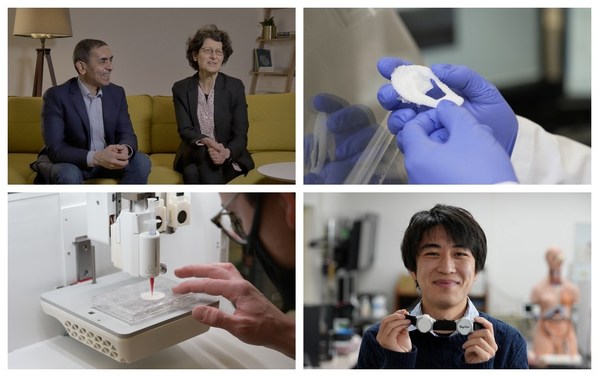
CNN’s Vital Signs explores the future of medicine
mRNA technology has been thrust into the spotlight thanks to its use in the development of Covid-19 vaccines. Dr. Gupta sits down for a virtual chat with the co-founders of BioNTech and the minds behind the Pfizer-BioNTech vaccine, Özlem Türeci and Uğur Şahin. They tell us how their early research paved the way for the Covid-19 vaccine and why mRNA could be a solution to treat cancer in the future, with a vaccine that could generate a tumor-specific immune response.
Two current human clinical trials for those vaccines focus on some of the hardest cancers to beat: colorectal and pancreatic. CNN hears from Dr. Vinod Balachandran, who is leading BioNTech’s phase one pancreatic cancer trial at Memorial Sloan Kettering Cancer Center in New York City. Dr. Balachandran explains the genesis of the project in research on long-term cancer survivors, which revealed that the body’s own immune system could be utilized to develop personalized mRNA vaccines. He hopes that the recently concluded trial will provide clues on how mRNA technology could be used to fight cancer more broadly.
CNN then visits the Wake Forest Institute for Regenerative Medicine (WFIRM) in the U.S. to learn about their work in 3D bio-printing tissues and organs using a patient’s own cells. Dr. Anthony Atala, Director of WFIRM, started his work in the field of regenerative medicine over 30 years ago, and his team was the first in the world to engineer a lab-grown bladder and successfully implant it into a patient. Today, his team engineers over 40 types of tissues and organs, and their regenerative technology is also used to test drugs and create personalized medicine.
Finally, CNN travels to Japan, where a group of cancer survivors are getting their voices back thanks to an AI-powered medical device. Patients who have had surgery to remove part or all of the larynx to treat their cancers are often left unable to speak. Traditional external speech aids are one option for voice-restoration, but they can sound unnatural and are difficult to use. To combat this, Masaki Takeuchi is developing the Syrinx – a hands-free, wearable device for people who have lost their voice. Engineered with the help of graduate students at the University of Tokyo, the technology uses a patient’s former voice recordings and runs them through a coding program, producing a sound similar to their old voice, allowing users to speak again.
Vital Signs – The Future of Medicine trailer: https://bit.ly/340bZZo
Vital Signs – The Future of Medicine images: https://bit.ly/3hJgqLH
Vital Signs microsite: https://cnn.it/34AHmXX
Airtimes for 30-minute special:
Saturday, 5th March at 2:30pm and 7pm HKT
Sunday, 6th March at 2pm HKT
Monday, 7th March at 12pm HKT
About CNN International
CNN’s portfolio of news and information services is available in seven different languages across all major TV, digital and mobile platforms, reaching more than 475 million households around the globe. CNN International is the number one international TV news channel according to all major media surveys across Europe, the Middle East and Africa, the Asia Pacific region, and Latin America and has a US presence that includes CNNgo. CNN Digital is a leading network for online news, mobile news and social media. CNN is at the forefront of digital innovation and continues to invest heavily in expanding its digital global footprint, with a suite of award-winning digital properties and a range of strategic content partnerships, commercialised through a strong data-driven understanding of audience behaviours. CNN has won multiple prestigious awards around the world for its journalism. Around 1,000 hours of long-form series, documentaries and specials are produced every year by CNNI’s non-news programming division. CNN has 36 editorial offices and more than 1,100 affiliates worldwide through CNN Newsource. CNN International is a WarnerMedia company.
Donate To The Indian Sun
Dear Reader,The Indian Sun is an independent organisation committed to community journalism. We have, through the years, been able to reach a wide audience especially with the growth of social media, where we also have a strong presence. With platforms such as YouTube videos, we have been able to engage in different forms of storytelling. However, the past few years, like many media organisations around the world, it has not been an easy path. We have a greater challenge. We believe community journalism is very important for a multicultural country like Australia. We’re not able to do everything, but we aim for some of the most interesting stories and journalism of quality. We call upon readers like you to support us and make any contribution. Do make a DONATION NOW so we can continue with the volume and quality journalism that we are able to practice.
Thank you for your support.
Best wishes,
Team The Indian Sun


