

SEOUL, South Korea, Dec. 15, 2020 /PRNewswire/ — Hyundai Motor Company unveiled details of its one-of-a-kind mini EV based on the ’45’ concept car in a short film on YouTube. The 6-minute video shows how the minicar uses Emotion Adaptive Vehicle Control (EAVC) technology to support young patients at the SJD Barcelona Children’s Hospital in Spain as part of the ‘Little Big e-Motion’ project.
Experience the interactive Multichannel News Release here: https://www.prnasia.com/mnr/hyundai_202012.shtml
EAVC is an artificial intelligence-based technology that optimizes vehicle environment based on information from both inside and outside the vehicle. Hyundai Motor Group is leading the development of this next-generation technology, as part of an academic research collaboration with the Massachusetts Institute of Technology (MIT) Media Lab.
EAVC technology monitors facial expressions, heart rate and respiratory rate, and combines these readings with input from the vehicle including speed, acceleration, noise and vibration. The technology then processes the data utilizing machine learning to optimize the vehicle environment and actively controls vehicle systems such as lighting, climate, music and fragrance dispenser.
EVAC is at the heart of Hyundai’s ‘Little Big e-Motion’ project. Equipped with this technology, the mini EV – designed by the same team that oversaw the ’45’ concept – will be used to support the treatment of young patients at hospitals. Hyundai donated this one-of-a-kind EV to SJD hospital in Barcelona where it will be used to support the mobility of young patients from hospital bed to treatment room, which is considered one of the most stressful trips for the children.
The EAVC-equipped mini EV interacts with its young ‘driver’ through five key technologies: Facial Emotion Recognition System, Breathing Exercise Belt, Heart Rate Monitoring Sensor, Emotion Adaptive Lighting, and Emotion Adaptive Scent Dispenser.
In addition to providing emotional support for the young patients, EAVC also assists the work of the medical staff at the hospital by informing them about the emotional state of the young patients without in-person interactions, which is especially useful in the era of COVID-19.
The company hopes to expand the use of this next-generation technology in mobility devices in the future to enhance driver safety and well-being.
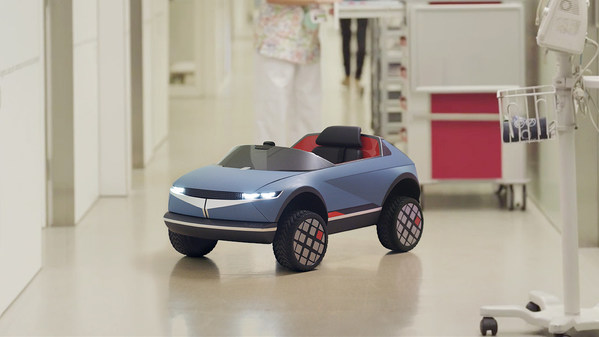
Hyundai Motor’s Mini ’45’ EV Puts Emotions in Motion
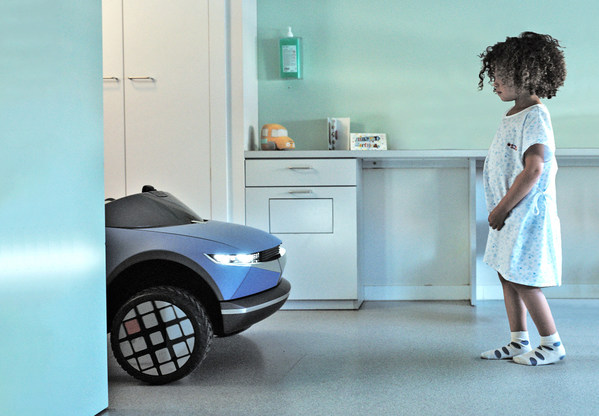
Hyundai Motor’s Mini ’45’ EV Puts Emotions in Motion
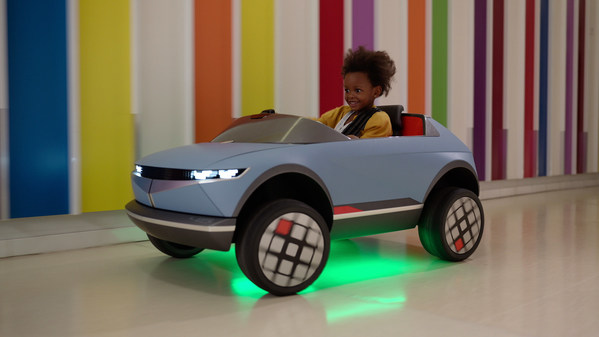
Hyundai Motor’s Mini ’45’ EV Puts Emotions in Motion
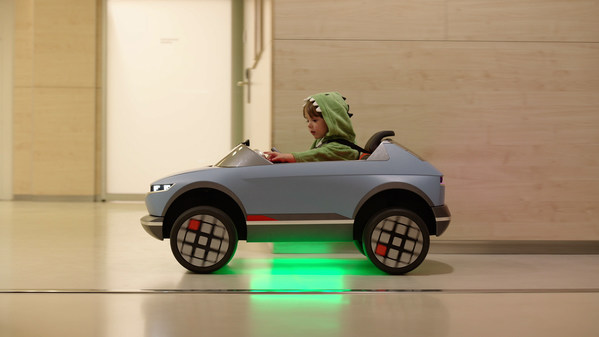
Hyundai Motor’s Mini ’45’ EV Puts Emotions in Motion
Donate To The Indian Sun
Dear Reader,The Indian Sun is an independent organisation committed to community journalism. We have, through the years, been able to reach a wide audience especially with the growth of social media, where we also have a strong presence. With platforms such as YouTube videos, we have been able to engage in different forms of storytelling. However, the past few years, like many media organisations around the world, it has not been an easy path. We have a greater challenge. We believe community journalism is very important for a multicultural country like Australia. We’re not able to do everything, but we aim for some of the most interesting stories and journalism of quality. We call upon readers like you to support us and make any contribution. Do make a DONATION NOW so we can continue with the volume and quality journalism that we are able to practice.
Thank you for your support.
Best wishes,
Team The Indian Sun


